Caring for dental hygiene is extremely important, since neglecting it leads to harmful bacteria building up in the mouth, which over time causes decay in the teeth and molars. If this decay is not treated early by the best cosmetic dentist in Egypt, the decay may penetrate deeper and reach the nerve of the tooth or molar, causing the patient severe pain, so that they are forced to take painkillers to calm it.
Over time, painkillers may fail to relieve the pain in the tooth or molar, and the teeth become sensitive to cold and hot liquids and foods, so the patient's life is greatly affected. This is because the nerve is the main source of pain sensation, and when decay reaches the nerve it means there is a channel opening directly onto the nerve, so the patient feels pain as soon as anything reaches the affected tooth.
A patient suffering from this type of decay needs the best method for treating the dental nerve in order to be rid of the pain they are suffering, which causes them great embarrassment and prevents them from living normally. So what is the best of these methods?
How to prevent tooth decay
Before pointing to the best methods that help eliminate dental nerve pain, we would like to stress that prevention is always better than cure: by following dentists' conventional advice on oral and dental hygiene, this problem can be prevented at the root.
Doctors' advice usually consists of:
- Rinsing the mouth after eating, and making sure no food residue is left in the mouth.
- Brushing the teeth with toothpaste at least twice a day, noting the need to use the types of toothpaste suitable for your teeth, and suitable types of toothbrush as well.
- Learning the correct way to brush the teeth, since brushing harshly or in the wrong way may damage the enamel layer, which in turn makes it easy to develop tooth decay.
- Using dental floss after eating and after brushing with toothpaste, to reach the finest spaces between the teeth.
- Consulting the doctor as soon as decay is noticed — whether it is visible or because the patient feels mild pain — and not relying on taking painkillers to relieve that pain, because the effect of painkillers is always temporary and will not treat the original problem causing the patient's pain; therefore using these painkillers for long periods instead of treating the main problem is dangerous.
- Resorting to a dental filling if a tooth is broken or cracked, since broken teeth are an open road to decay and a fertile environment for harmful bacteria to accumulate in the mouth.
But if the decay has reached the dental nerve, this advice will be of no use, and we will explain the ideal way to treat this problem below.
How do I know that the decay has reached the nerve?
Detecting decay and its degree is the dentist's specialty, but there are some signs that may indicate the decay has reached the nerve, which the patient can recognise; at that point they must go to the doctor immediately to treat the problem before it worsens.
Among the signs indicating that decay has reached the nerve:
- Feeling continuous pain in the teeth.
- Painkillers being ineffective, whether this appears in the form of the pain returning a short while after being relieved by medication, or the medication having no effect on the pain at all.
- Tooth sensitivity to cold and hot drinks.
These are among the important signs that may indicate the decay has reached the dental nerve.
What is the best method for treating the dental nerve?
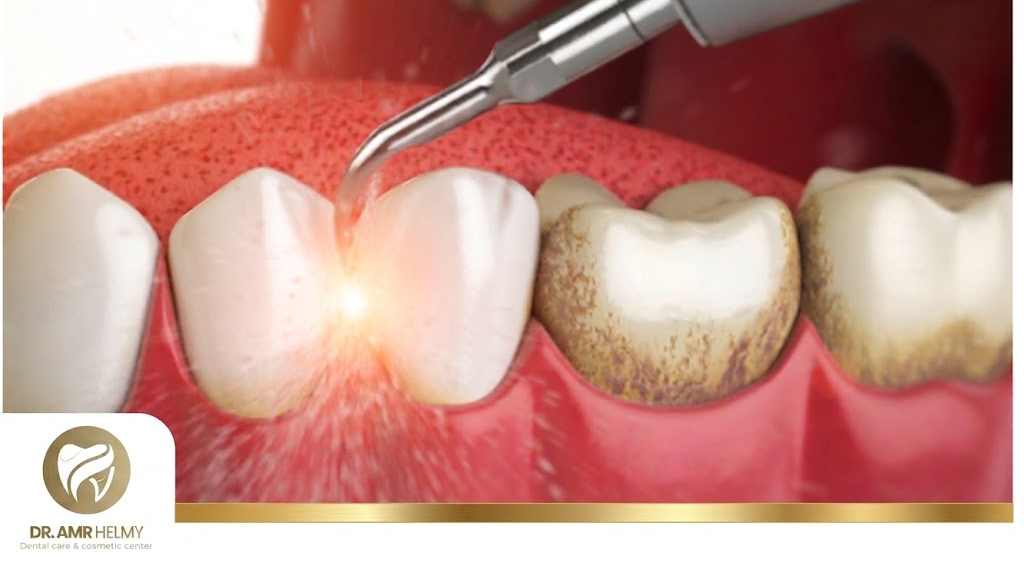
The best method for treating the dental nerve and eliminating the strong pain this problem causes is to resort to laser root canal filling. There is no need to worry about the prices of laser dental fillings, as they are within everyone's reach; this treatment is considered the only and final solution before resorting to extracting the affected tooth or molar.
This problem is treated over two or three sessions, in which the decay is completely removed, then the tooth's nerve is killed, the canals inside the tooth or molar are cleaned of nerve remnants, and antibiotics are taken for a period of time if the patient has infections caused by this decay.
In the final session the nerve is filled by laser, by placing a particular material called (gutta-percha) to fill the canals inside the tooth or molar, and then placing the final filling, which exactly resembles the colour of the teeth.
The molar or tooth that has undergone this procedure often needs a cap fitted — what is called a crown — to protect it from breaking at a later time.