Porcelain teeth, or porcelain restorations, are one of the methods used to repair cosmetic and functional dental problems. The method of fitting porcelain teeth differs according to the type the patient wishes to obtain, and according to what the best dentist in Giza determines after seeing the patient's condition.
Dr. Amr Helmi — consultant in dentistry and cosmetic dentistry — tells us about the details of fitting porcelain teeth, whether using porcelain veneers or the fixed restorations used in the case of losing a tooth, and he also explains to us the most important drawbacks of fitting porcelain teeth.
What are porcelain teeth?
When patients look into how porcelain teeth are fitted, they face one of two types: either porcelain veneers, which are bonded onto the teeth, or fixed restorations (crowns) which are fitted in the mouth in the event of losing a tooth. The details of these are as follows:
Porcelain veneers
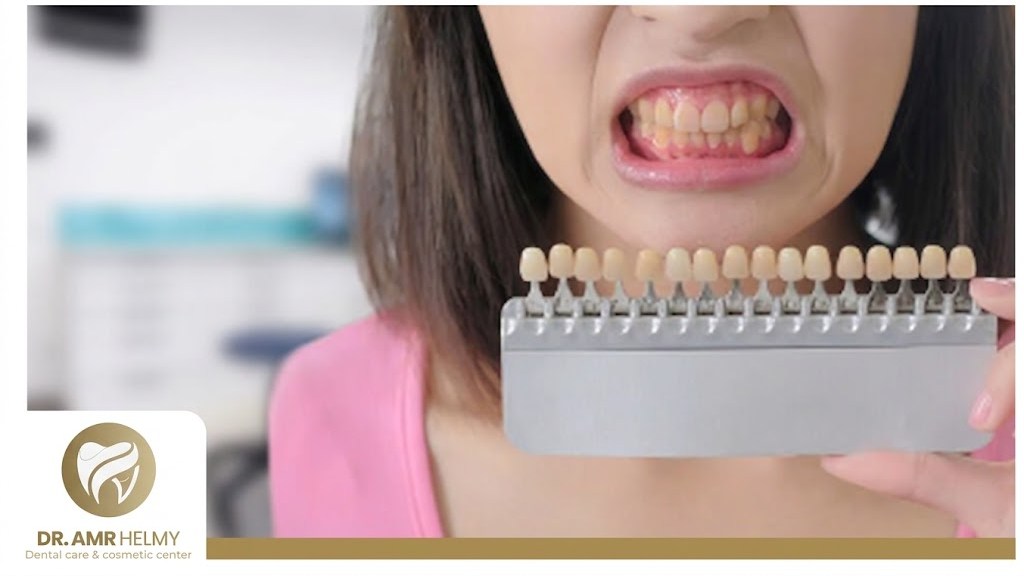
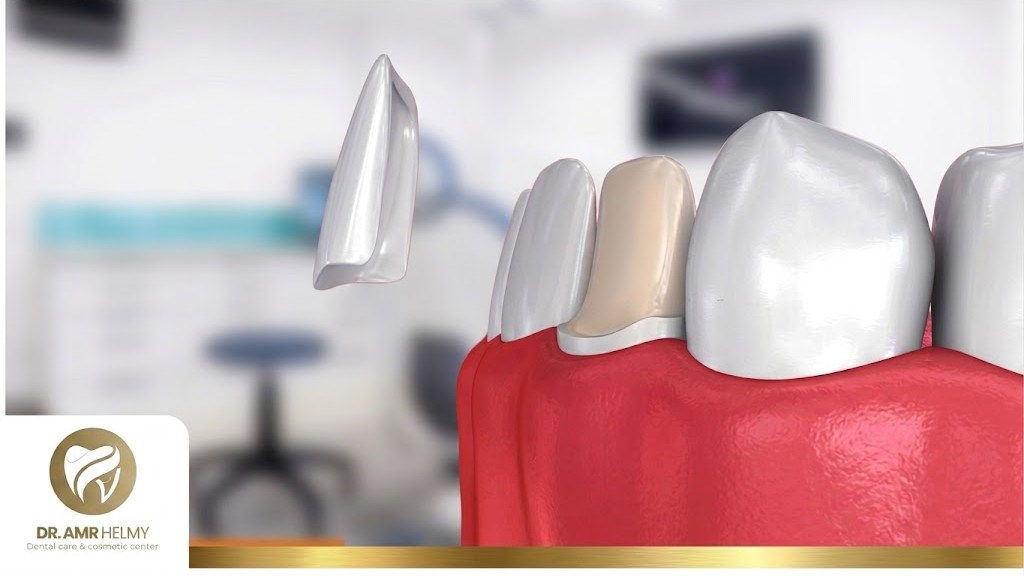
These are extremely thin lenses resembling the colour of natural teeth. They are bonded onto the teeth to obtain the best shape for the smile and to get rid of many of the problems that affect the smile's cosmetic appearance — such as dental staining that occurs as a result of smoking or frequently eating coloured foods — and also to get rid of the (minor) gaps that may exist between the teeth, in addition to obtaining a harmonious and even shape for the teeth in cases where some teeth are larger than others, or where the teeth are not in a single straight line.
Fixed porcelain restorations
As for the method of fitting fixed porcelain teeth, this consists of a complete tooth or molar made of porcelain positioned between two crowns also made of porcelain, which are fixed onto sound teeth adjacent to the missing tooth or molar — an ideal means of replacing missing teeth, and an economical alternative to conventional dental implants.
In what follows we discuss how porcelain teeth are fitted in both types: veneers and fixed restorations.
First: how porcelain teeth are fitted (veneers)
Let us begin first with the method of fitting porcelain veneers, which is the newest and best method in the field of cosmetic dentistry..
The stages of fitting porcelain veneers proceed as follows:
The first session:
In it the doctor examines the patient's teeth thoroughly and identifies the problems they suffer from, and whether or not they have gum inflammation, and makes sure that the condition of their teeth is suitable for fitting porcelain veneers.
In this session too, the doctor discusses with the patient their expectations of this procedure and tells them about the advantages and drawbacks of fitting porcelain teeth, and the prices of fitting porcelain teeth, so that the patient is fully aware of all the details of this procedure.
The second session:
If the patient does not suffer from any inflammation and also does not need orthodontic braces fitted, the doctor begins taking the measurements for the veneers that will be fitted onto the teeth, and determining the colour suitable for the patient according to several considerations — among them: the skin colour and the colour of the whites of the eyes.
These measurements are then sent to the laboratory to be manufactured and brought to the next session, which is usually a week or two after this session.
The third session:
In this session the doctor bonds the porcelain veneers onto the teeth. The method of fitting porcelain teeth in this procedure relies on shaving off part of the enamel layer of the teeth, by no more than 0.3 mm, in order to fit the veneers, whose thickness likewise does not exceed 0.3 mm.
The session ends at this point, and the doctor prescribes some instructions the patient must follow in order to obtain the best results from the procedure.
Note: sometimes the doctor may limit it to two sessions only, if the patient's teeth are in good condition and there is no gum inflammation.
Drawbacks of fitting porcelain teeth (veneers)
In truth, the method of fitting porcelain teeth (veneers) does not involve many drawbacks — only the high cost, and the impossibility of reversing this procedure because part of the enamel layer of the teeth is filed away; so if one of these veneers is damaged, the patient will need to replace it with veneers again, and will not rely on the natural teeth at that point.
<!-- inline CTA button pair rendered here -->
Contact us by phone
Contact us on WhatsApp
Second: how fixed porcelain teeth are fitted
This method is considered a low-cost alternative to dental implants in the case of losing one tooth or more. Its main aim is to replace the missing tooth or molar with another made of porcelain, so that it performs the function of the missing tooth and does not affect the cosmetic appearance of the smile.
The stages of fitting porcelain teeth proceed as follows:
The first session:
The doctor examines the patient's teeth to make sure there is no inflammation at the site of the missing tooth, and no periodontal pockets. If one of these problems is found, the doctor treats it first, then moves on to the stage of fixing the porcelain restoration.
The second session:
The doctor files down the two teeth or two molars adjacent to the missing tooth (so as to be able to fix the two crowns onto them), and then takes the measurements for the two crowns and the missing tooth using modern equipment and three-dimensional imaging, so that the restoration can be prepared in the specialised laboratory.
The third session:
The doctor fixes the two crowns, between which sits the complete tooth, onto the teeth that were filed down in the previous session, and then makes sure that the patient feels comfortable when closing their mouth and when biting down on their teeth, and does not feel that the restoration is raised in one part, or affecting the chewing process.
Drawbacks of fitting fixed porcelain teeth
Unlike porcelain veneers, which did not involve many drawbacks, the method of fitting fixed porcelain teeth has fundamental drawbacks, namely:
- Filing down two completely sound teeth or molars.
- An increased likelihood of food debris accumulating beneath the artificial tooth.
- The impossibility of cleaning between the teeth in this restoration, because it is a single piece with no separations.
- Its colour is considered different from the colour of natural teeth, and so it can easily be noticed.
But its low price (compared with implants) still encourages many people to undergo this procedure.
Book now with Dr. Amr Helmi, the best dentist in Egypt
Book now